
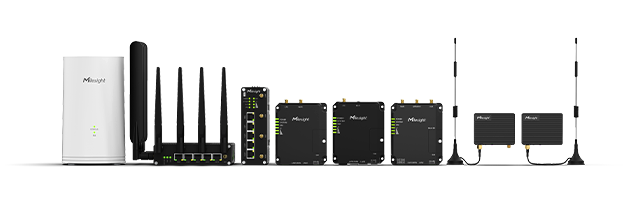
Industrial 4G router procurement decisions are frequently made on the wrong criteria. Data throughput specifications that are largely irrelevant for the application, feature lists comparing items that are present in all competing products, and price comparisons that ignore total cost of ownership over a 7-10 year deployment lifetime. This guide focuses on the specifications that actually differentiate products for industrial applications.
Why Not Just Use a Standard Business Router
Standard business-grade routers are designed for an office environment: 20 degrees Celsius, clean power, low vibration, IT staff available for regular maintenance. Industrial sites are often none of these things. A router installed in an unheated outdoor cabinet, powered from an unregulated supply, in a dusty or corrosive environment, needs hardware specified for those conditions. Consumer and light commercial routers fail in industrial environments not because they are poor quality products but because they are not designed for the duty cycle.
Operating Temperature Range
This is the single most important specification for most UK industrial deployments. The standard commercial temperature range is 0 to 40 degrees Celsius. Industrial-grade routers operate from -40 to +70 degrees Celsius. An outdoor cabinet in Scotland in January can reach -15 degrees. A cabinet in direct sunlight in summer can reach 60 degrees before the router’s own heat is added. Milesight UR series routers all operate in the full industrial temperature range.
Serial Ports and Modbus Gateway
If any device at the remote site communicates via RS485 Modbus RTU – and in utility and industrial environments this is common – a router without an RS485 serial port requires an additional protocol gateway device. This adds cost, complexity, and another component that can fail. The Milesight UR75 and UR35 both include RS485 with built-in Modbus gateway firmware. The UR32 includes RS232 but not RS485. Verify the serial interface requirement before specifying.

Other Specs That Matter
Dual SIM: For applications where downtime is unacceptable, dual SIM with automatic failover is standard. VPN support: OpenVPN and IPsec are the most common requirements. Remote management: DeviceHub allows remote configuration, firmware updates, and monitoring without site visits. Power input range: Industrial sites often supply 12V or 24V DC. The UR series accepts 9-48V DC, covering most industrial supply rails without additional regulation. Hardware watchdog: A watchdog timer reboots the router if the cellular connection fails, eliminating the need for site visits to power-cycle stuck units.
Milesight UR Range Summary
The UR32 is a compact 4G LTE router for simple WAN gateway applications. The UR35 adds RS485 Modbus gateway, dual SIM and digital I/O. The UR75 is the flagship with 5G, RS485, dual SIM, CAN bus, and the most extensive feature set. All operate in the industrial temperature range. All are managed via DeviceHub.